
Devolution Hub
This hub showcases evidence-led insights from social science research to offer informed perspectives on devolved and sub-national government in the UK.
2026 is a critical year for devolution in the UK. Scotland will hold elections to Holyrood with the result arguably less predictable than any time since 2007. The Senedd will hold elections on new constituencies and under a new voting system with Welsh Labour widely expected to lose its dominance in Wales for the first time in a hundred years. In England, the devolution white paper will progress its way through the Union Parliament, fundamentally changing the landscape of mayoralties and combined authorities. And in Northern Ireland, we can expect a ramping up of political rhetoric ahead of Stormont elections in 2027.
The Campaign for Social Science Devolution Hub will seek to shine a light on these issues not just individually across the four nations, but also by asking how the different polities across the UK might learn from each other, and whether the inconsistencies of the UK’s devolution map are an inherent strength or a challenge for a harmonious union of regions and nations. Through written contributions, webinars and in-person events, drawing on expertise from Campaign supporters, learned societies from across social science disciplines, and others, we will garner the insights of leading social scientists on these important issues.
Forthcoming events
We have a range of events, both online and in-person, coming up exploring devolution in the UK.

Rebooting the public sector: How can the next Stormont Executive deliver positive public service transformation?
As part of the Campaign’s work on devolution this year, we’re excited to be partnering with Ulster University and the ARINS project for an event exploring how the next Stormont Executive can deliver positive public service transformation without damaging its political and public mandate. This one day event, which is part of the ESRC Festival of Social Science, will consider how best to bring about meaningful, lasting and positive change in light of the key policy areas of education, health, law and criminal justice, and public realm/environment and infrastructure. With a keynote address by Professor Matt Flinders (University of Sheffield) and a range of speakers from across academia and the public sector, this conference will provoke wide-ranging discussions between leading experts. These collaborative discussions will enable the identification of creative, practical and positive steps for improving the public sector in Northern Ireland in the interests of the wider community.
Photo Credit: NR on Unsplash
Ulster University, Belfast, Northern IrelandRegister here
Achieving growth through the power of place
Join us as we launch our new policy report, Perspectives on Achieving Good Growth in the UK at this event in partnership with University of Liverpool. Attendees will be able to take away copies of the report hot off the press. The event is also part of the ESRC Festival of Social Science and explores growth through the power of place, which is a key theme of the report.
So, what role does place play in driving economic growth, innovation, and opportunity? As the new PM seeks to “deliver good growth in every postcode”, understanding the unique assets and challenges of specific places has never been more topical or more important. Join academics, policymakers, business leaders, and regional stakeholders at the University of Liverpool for an engaging discussion on how places can unlock sustainable and inclusive economic prosperity. The event will be chaired by Professor Richard Black FAcSS (Provost, University of Liverpool) and our panellists are Susan Jarvis FAcSS (Co-Director, Heseltine Institute for Public Policy, Practice and Place, University of Liverpool); Philip McCann FAcSS (Sir Terry Leahy Chair of Urban and Regional Economics, Alliance Manchester Business School); and Colin Sinclair (CEO of Sciontec and Knowledge Quarter Liverpool).
Victoria Gallery & Museum Ashton Street Liverpool L69 3DRRegister here
Can policy deliver growth in every postcode? – Campaign for Social Science Annual Sage Lecture 2026 with Professor Dame Diane Coyle FAcSS
This year’s Campaign for Social Science Annual Sage Lecture will be delivered by Professor Dame Diane Coyle FAcSS, Bennett Professor of Public Policy and Research Director, Bennett School of Public Policy, University of Cambridge.
Andy Burnham has set out an ambition for “growth in every postcode”. Professor Dame Diane Coyle FAcSS will discuss this challenge, exploring the practicalities of delivering economic growth across different places. Diane will talk about the kinds of policies, investment, institutions and local capabilities we would need to turn the ambition into reality, and how national, regional and local government might work together to deliver it. Also speaking will be Professor Monder Ram FAcSS, Professor of Small Business at Aston University and Founder-Director of the Centre for Research in Ethnic Minority Entrepreneurship (CREME), and Professor Anna Valero, Professor in Practice at the LSE’s Centre for Economic Performance and Global School of Sustainability; Director of the CEP’s Growth Programme and Deputy Director of the Programme on Innovation and Diffusion. The event will be chaired by Professor Christina Boswell FAcSS, Professor of Politics at University of Edinburgh and Chair of the Campaign for Social Science.
Sage Publishing 3rd floor, HYLO, 103-105 Bunhill Row, London EC1Y 8LZRegister hereCatch up: How have different devolved regions in England delivered healthcare? And what lessons might the newly-established bodies learn from them?
As part of the Campaign for Social Science’s series on devolution, we jointly hosted (with the Health Foundation) a webinar on 23 September 2026 exploring the devolution of healthcare policy within England.
Catch up on our event recordings
If you missed any of our events exploring various aspects of devolution, you can catch up with the recordings linked to below.




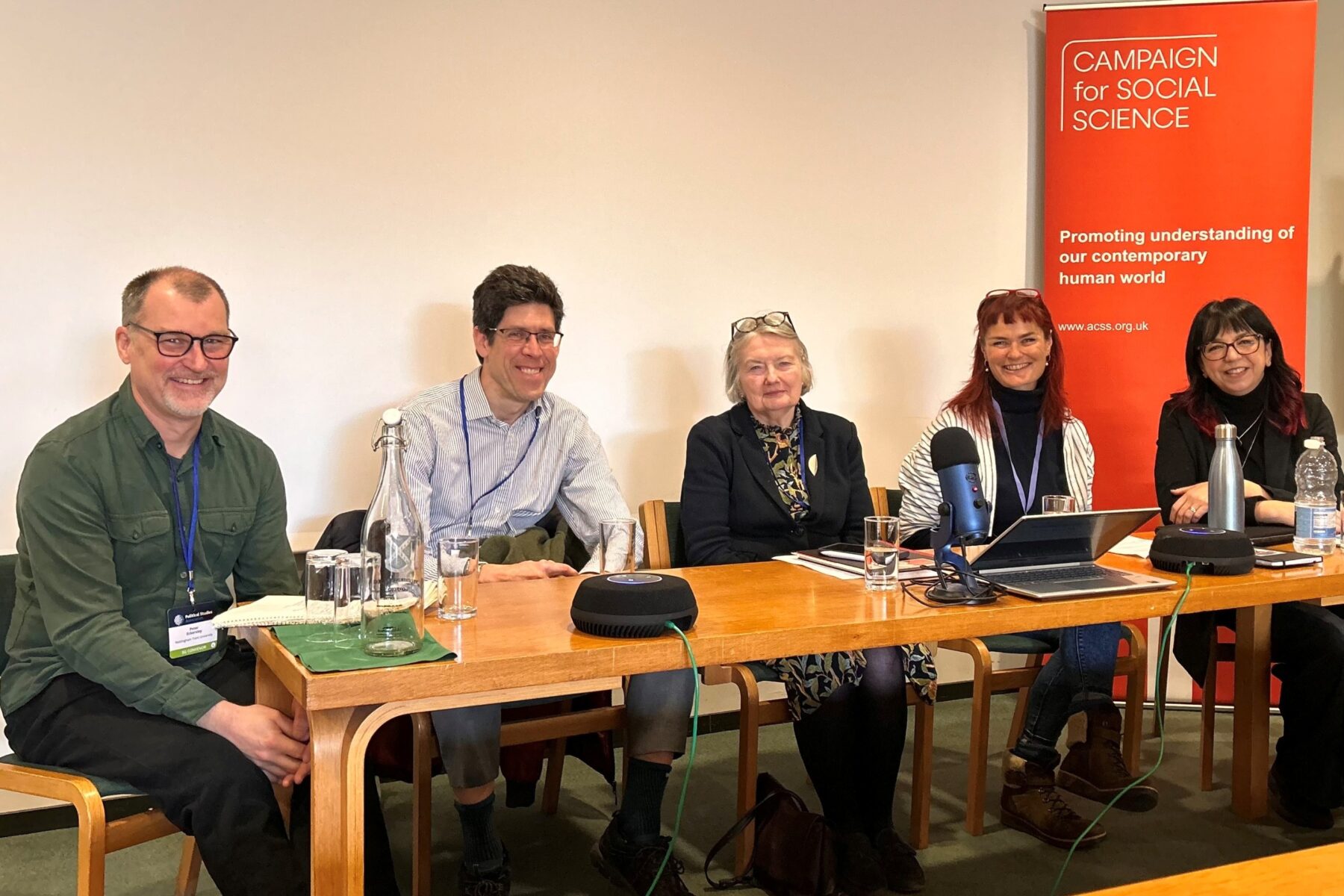

Blog: Union Diplomacy: Can English Devolution strengthen the Union?
In this piece Jack Shaw of Groundwork Research, the Productivity Institute, and the Bennett School for Public Policy, explores whether English Devolution might strengthen the UK union by offering opportunities to develop partnerships between cities, regions and devolved administrations across all four nations.
Comment and analysis
Evidence-based commentary from leading social scientists offering perspectives and evidence-based ideas on how the different polities of the UK might learn from each other.