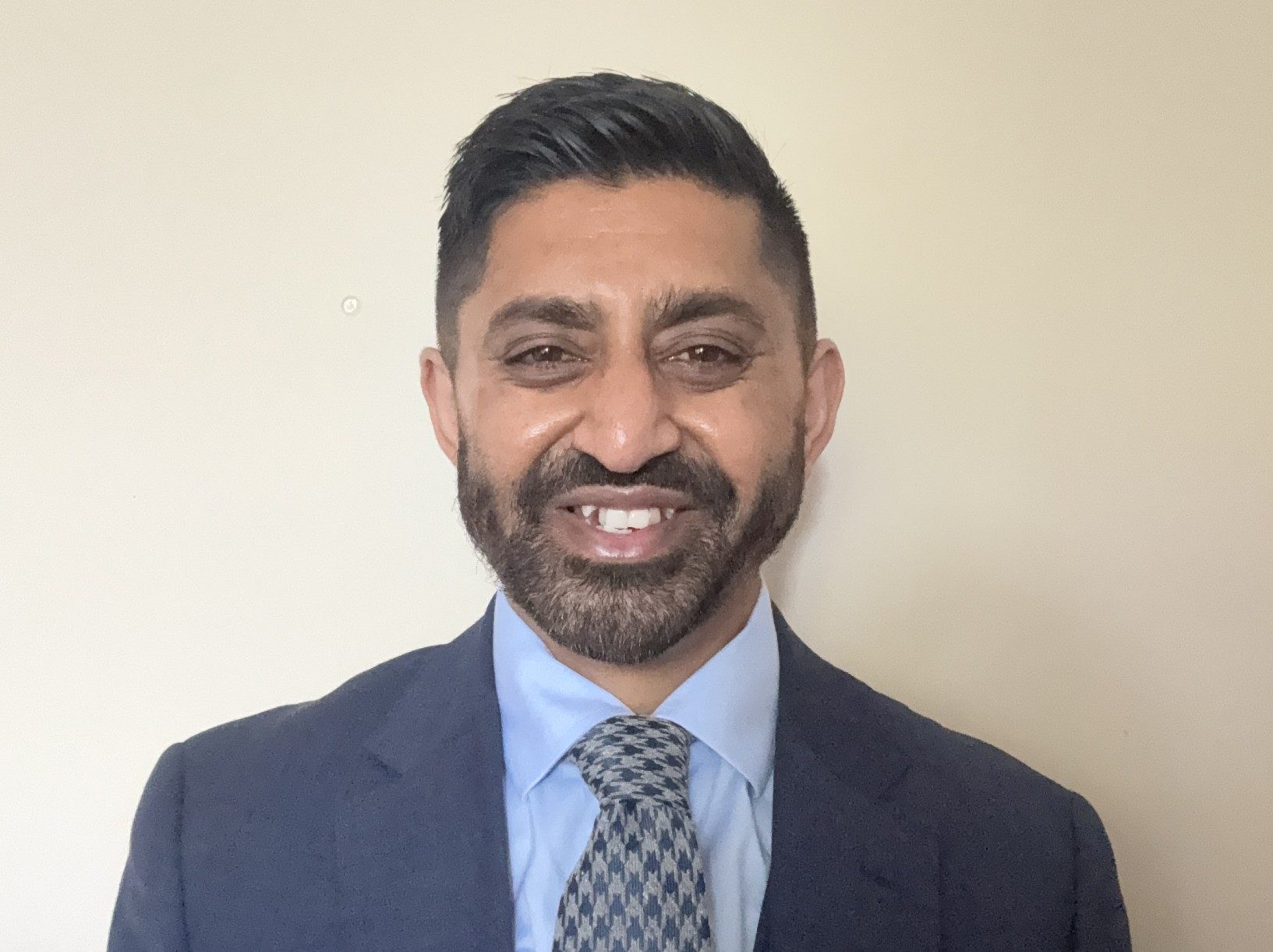
Sunny Gunessee is Head of Sociology and Lead Practitioner (Teaching and Learning) at the Jewish Community Secondary School (JCoSS). Alongside teaching, in his role, Sunny leads whole-school teaching and learning strategy, which includes leading and developing evidence-informed professional development and quality assurance systems that help to improve staff performance and student outcomes. He also drives innovation and collaboration across teams, mentors staff, embeds initiatives such as AI in education, and partners with social science organisations to expand real-world employability pathways.
Role: Head of Sociology & Lead Practitioner (Teaching and Learning)
Organisation: Jewish Community Secondary School (JCoSS)
Sector: Public
Studied: Social Sciences (BSc), Postgraduate Diploma in Sociology, PGCE in Social Sciences
Sunny Gunessee
How did you get to where you are now?
Having initially started my career in retail, I moved into the education sector. From quite humble beginnings as a humanities teacher, I moved to West Sussex to become a head of department and head of faculty where I stayed for nearly six years. From there I moved back to South London and worked at an all-boys school as a Head of Sociology and a Continuing Professional Development (CPD) Lead, before moving to the school I’m in today, which is a faith school in North London.
It’s been quite a structured career path, in terms of educational settings, but I think this has been incredibly valuable because working in different schools has allowed me to understand how different organisations work and that not all schools work the same way. For example, working in the school I’m in today has allowed me to see how a sense of community is vital. And it has reignited my passion and love for the social sciences and has given me a sense of purpose in seeing how I can extend the social sciences beyond the classroom and into the world of careers, in helping young people navigate those first steps into the world beyond formal education.
What do you do in your current role?
Because I wear two hats as Head of Sociology and as a Lead Practitioner for Teaching and Learning, I’m often involved in a range of different activities. As Head of Sociology, it will come as no surprise that I have to teach lessons. I teach Key Stage 4, which is GCSE, and Key Stage 5, which is A Level. This is a huge amount of fun. Working with young people who are taking the first steps to owning their learning by choosing to study sociology at GCSE as well as those at A Level who are looking to take their love of the subject further by entering higher education, apprenticeships or a vocational route.
My role as Lead Practitioner means I have a range of different activities and expectations required of me, alongside my teaching. In this part of my role I work as a co-induction tutor, supporting young and inexperienced teachers, who are often trainees and early career teachers, by helping them navigate the education system and how to be a teacher, providing guidance from my own experiences in this sector.
As well as this I am often working with staff who are engaged with their pedagogy and are looking to challenge themselves in terms of better practice, as well as supporting colleagues who may be underperforming. As part of this I use the skills my social science background has helped me to develop, by being an empathetic listener and understanding that everyone from different backgrounds has a range of different experiences.
I also have to problem solve quite regularly, working with senior leaders to often think outside of the box, anticipating potential problems and troubleshooting different ideas. My background in social science gives me a different perspective which is very valuable when working with different people to help solve problems both inside and outside my organisation.
What skills do you need for this role?
As someone whose worked in this career for nearly 20 years, I would say a huge amount of resilience is required. You come across so many different situations regarding colleagues, staff, peers and young people that your resilience is incredibly important if you want to be in this career for a long time and, ultimately, make a difference. Alongside that, I think humour is very important, because it means you are often able to make challenging situations feel more approachable for young people and helping them reach their full success. It’s also important when working with colleagues, especially in very challenging circumstances, bringing that much needed humour means we are able to have a sense of perspective and understanding what it is we’re working towards.
As well as that, I believe that my skills of self-reflection mean I am always looking for ways to improve. Finally, I think being organised is really essential. I have to work with a range of people both inside and outside the organisation, which means there can be times where I’m faced with competing deadlines and limited resources. So, my methodological approach to my working life enables me to be successful in balancing those things.
“The world of social sciences has helped me to understand that having compassion, empathy and cultural awareness is really important for engaging with a wide variety of different people.”
What do you enjoy most about your job?
Although there are many aspects of my job I enjoy, I’m going to focus in on the Lead Practitioner part of my role, which affords me the opportunities to work with people in and outside of the organisation. The biggest positive for me about this part of my job is that I get to work with future leaders who are currently developing and evolving their own skills. This means that I can provide them with advice and guidance in how they move forward in their career, even if they’re not from a social science background, and this is something that I really enjoy.
As well as this, I love that I get to work with external organisations. Recently, I have worked at a conference exploring AI and ethics and I’ve worked alongside exam boards to understand how we best implement AI into our subjects, especially at a social science level. Further to this, I also work with associations often looking at the world of social science in relation to careers and future pathways. I’m very fortunate that my current organisation is enabling me to continue to develop best practice and transfer my own research and understanding into universities. As part of this, I get to visit universities and other places of further learning to help support young people go into the world of work and ultimately understand that the world of social sciences has something vital to offer employers.
What impact does your role have?
The world of social sciences has helped me to understand that having compassion, empathy and cultural awareness is really important for engaging with a wide variety of different people whether that’s parents, students, senior leaders, governors or external agencies. These skills mean I am able to align these groups around a common goal effectively and that is really impactful. Often these groups can be misaligned which is why the role I do today is so important. My social science background means I am able to carry out my role with contextual understanding, compassion, cultural awareness and accountability, and without those qualities and skills I wouldn’t be able to bring these groups together to work towards a common goal of helping students take the next steps into their lives.
Why did you choose to study social science?
I actually think the social sciences chose me. Due to having a difficult upbringing, I’ve always searched for answers to understand my circumstances. I think sociology, psychology, politics, economics etc has really helped me to understand the world I live in and to paint it as part of a much bigger picture. Social science has given me so much in terms of understanding the world, and now it allows me to help the young people who I work with understand the world they are living in too.
“Studying the social sciences is nothing but a positive as it ultimately helps us to solve future problems and understand that the world is much more complex than just being right or wrong.”
Where do you see yourself in five years’ time?
I’ve been really lucky that my current organisation has supported me in my own research regarding social sciences and careers and employment. I’ve been fortunate to speak at different associations as well as publish a paper along with colleagues. What I would really love to be working on moving forward is how we support further education and higher education to close the gap in terms of the social sciences. Particularly in terms of helping 18-year-olds that go into the world of higher education or apprenticeships or the workplace understand and see that the work that they do in school actually translates to the ‘real world’ and is applicable to their future careers. I think this would be a huge part of the work I would like to focus on over the next five years.
As well as this, I would love to continue to work with different associations, and to do research into how current generations view the social sciences and their worthiness in terms of future employment. As part of this I would be keen to help to make it really explicit to young people how the skills they develop through social science subjects lends itself to solving many of the policy crises we find in the contemporary world in which we live.
What would you say to someone considering studying or pursuing a career in the social sciences?
Lean into it! The social sciences enable you to investigate how our contemporary world works. There are so many subjects which are black and white, but the social sciences look at different shades of grey, which is often where the nuance is. In the world of social sciences, we try to understand complex layered problems and if we have any chance of moving forward in a sustainable, cohesive fashion, it is vital that we understand these subtle nuances which the social sciences provide. Studying the social sciences is nothing but a positive as it ultimately helps us to solve future problems and understand that the world is much more complex than just being right or wrong.

This interview was undertaken in 2026 and was correct at the time of publication. Please note that the featured individual may no longer be in role, but the profile has been kept for career pathway and informational purposes.