
Professor Rob Francis was conferred to the Fellowship of the Academy in autumn 2026. He is Professor of Urban Ecology and Society and Vice Dean (Education and Students) in the Faculty of Social Science and Public Policy at King’s College London.
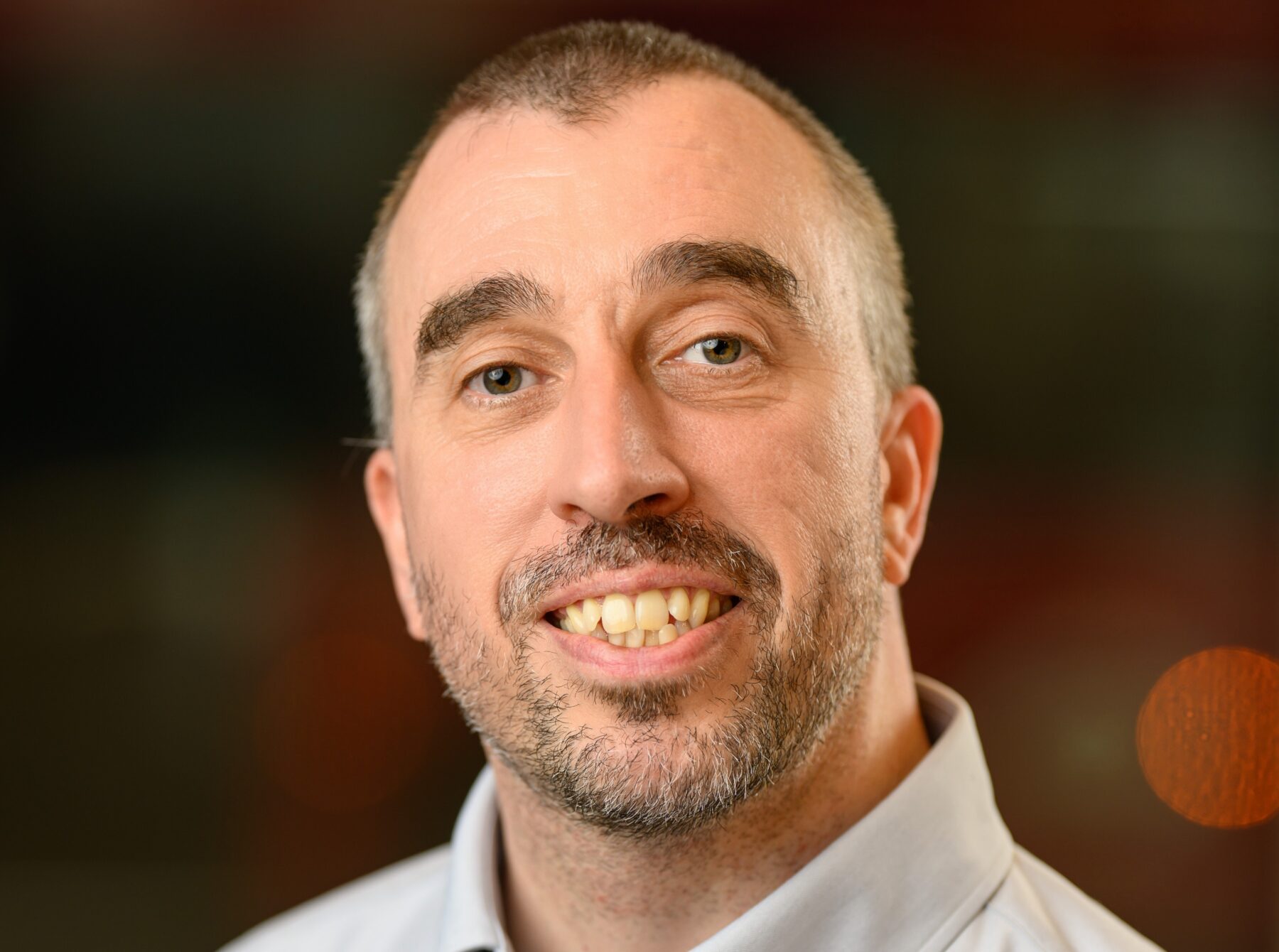
Professor Robert FrancisFAcSS
Rob’s research and teaching sit at the intersection of ecological and social sciences, with a particular focus on urban ecology and society. His interdisciplinary work spans urban ecology and biodiversity, urban rivers, biogeomorphology, reconciliation ecology, invasive alien species, nature-society interactions, and the environmental impacts of warfare.
Rob’s research examines how ecological systems function within human-dominated environments and how societies can better understand, manage, and coexist with the natural world. Alongside his environmental research, Rob also conducts educational research and scholarship, with a particular interest in assessment, feedback, and student learning in higher education.
Rob has published more than 70 peer-reviewed journal articles and book chapters and is the author and editor of five books, including major works on urban ecology, invasive species, biosecurity, and landscape ecology. He joined King’s College London in 2004 after completing his PhD in Geography at the University of Birmingham.
Why do the social sciences matter?
As an ecologist who works on biodiversity and other environmental concerns in heavily modified systems such as cities, the importance of the social sciences has always been apparent to me. Ecologists have a detailed understanding of ecological patterns and processes, but these are increasingly driven by societal actions and decisions. Many barriers to ecological restoration and enhancement are not just scientific, but social, political and economic. The social sciences provide evidence and insights into human behaviour, institutions, governance and values, which is essential for developing ‘reconciliation ecology’, wherein ecological and societal needs are achieved in the same physical space, to the benefit of both nature and society. An interdisciplinary understanding of the social sciences alongside the ecological and environmental is crucial for humanity’s future. This will help us determine not only what works ecologically, but also what people will support, adopt and sustain.
What do you enjoy most about your work?
I particularly enjoy exploring the complex relationships between people and nature, particularly in urban ecosystems. Towns and cities are fascinating socioecological systems and it’s important to conduct research across disciplines to find innovative and effective ways to improve ecological quality and make them healthier, more resilient and more biodiverse.
What is the most urgent issue social scientists need to tackle today and within the next three years?
The most pressing challenge for me is determining how societies can respond effectively and equitably to accelerating environmental change. Biodiversity loss, urbanisation, climate change, and pollution increasingly interconnected, and their impacts are experienced unevenly across communities. Social scientists have a vital role in understanding how governance, public engagement, social inequalities and cultural values influence environmental decision-making. As the world becomes geopolitically more unstable this will be increasingly important if we are going to address these global challenges.
What does being a Fellow of the Academy of Social Sciences mean to you?
Being elected a Fellow of the Academy of Social Sciences is both a tremendous honour and a recognition of the importance of interdisciplinary research. It reflects the value of bringing ecological and social perspectives together to address some of the most significant challenges facing society. I value being part of a community of scholars committed to producing research that informs policy and benefits society. I hope to contribute to strengthening connections between the environmental and social sciences, supporting evidence-based decision-making, and encouraging the next generation of researchers to work across traditional disciplinary boundaries.