
Professor Kate Dommett was conferred to the Fellowship of the Academy in autumn 2026. She is Professor of Digital Politics at the University of Sheffield with her research and teaching focus on digital technology and democratic politics.
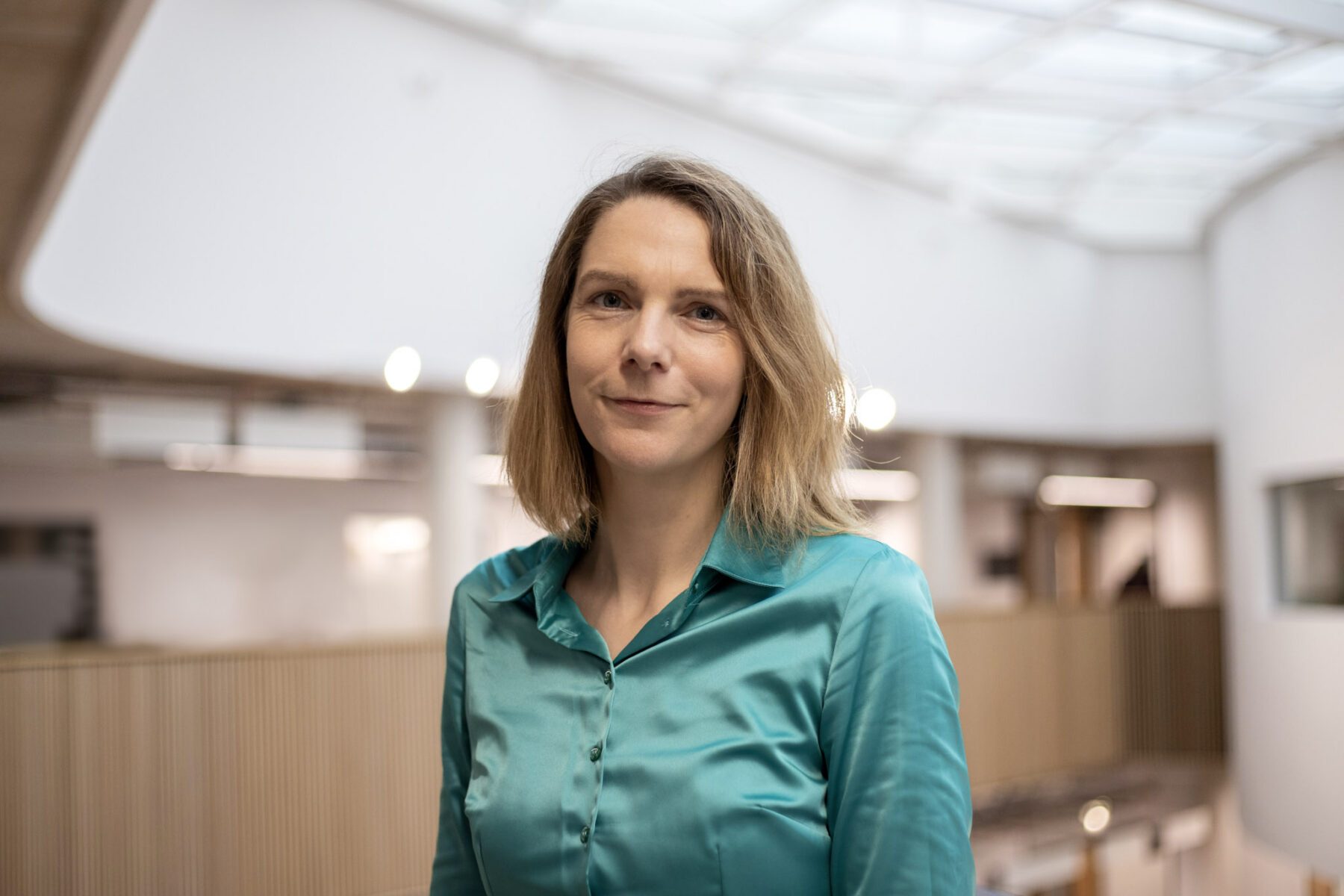
Professor Kate DommettFAcSS
Kate’s research explores the relationship between citizens and the state in contemporary democracies and she has particular expertise in data use, election campaigns, political advertising, and the regulation of digital politics. Her work examines how digital technologies are reshaping political behaviour and democratic institutions, and how governments, regulators, and citizens are responding to the opportunities and challenges of an increasingly digital political environment. Her recent projects have investigated the use of personal data in political campaigning, online political advertising, digital citizenship, and the governance of emerging technologies in democratic processes.
Kate’s work is driven by a commitment to addressing real-world problems and informing policy and practice. She has served as Special Adviser to the House of Lords Select Committee on Democracy and Digital Technologies and is currently a member of the Department for Culture, Media and Sport College of Experts.
Her research has been supported by major grants from organisations including the Leverhulme Trust, the Economic and Social Research Council, the British Academy, and the Engineering and Physical Sciences Research Council. Kate is also an experienced public commentator whose work has been featured by BBC Radio 4, BBC News at Ten, BBC Radio 5 Live, France 24, and other national and international media outlets.
Why do the social sciences matter?
The social sciences provide a diverse range of complementary expertise; spanning fundamental science to the most applied participatory research. This diversity of thought is key to understanding, intervening and envisioning the kind of society we want to live in. Without social sciences research we would be in danger of neglecting the very human attributes that affect how and why things work. We would lack an appreciation of why envisaged effects may fail to transpire, or how beliefs and ideals can lead people to behave in sometimes unpredictable ways. Social scientists can offer valuable contributions to almost any question being faced by society. They can help us think through how the data being collected by AI companies may create inequalities, how water shortages can be tackled by creating more sustainable buildings, and why political ideals rise or wane. A world without the ability to answer these questions would be far poorer, showing the essential value of social science.
What do you enjoy most about your work?
As a political scientist I devote my time to questions of power, thinking about how and why political systems operate and how we may want to constrain or enable different sources of power to create the kind of society we want to see. Applied specifically to consider elections and digital technology, I am particularly fortunate to be working on questions that are immediately consequential for contemporary life. I get to consider how social media platforms and digital providers wield power and what is and is not acceptable. I examine how and why political actors are using digital technology and what effects this has on citizens. Asking these questions, I work closely with electoral regulators and observers to generate evidence to design effective regulation, translating empirical research into practical outcomes. The chance to see and hear how practitioners from outside academia grapple with the same topics and problems I’m interested in always provides invaluable opportunities for learning and is something I particularly enjoy.
What is the most urgent issue social scientists need to tackle today and within the next three years?
The list of challenges facing society is daunting. Fundamental shifts in national economies, changes to the nature and culture of work, and rising inequalities between generations are creating a cocktail of pressures to which there is no obvious cure. If society is to continue to advance the idea that each new generation will do better than the last, then the social sciences will be critical to diagnosing and understanding the drivers of these changes and mapping potential routes for response. The difficulty will be doing so whilst decision-makers face a range of other pressures, such as how to tackle climate change and ensure peace and security. The task is by no means easy, but social science knowledge will be critical to identifying meaningful interventions.
What does being a Fellow of the Academy of Social Sciences mean to you?
Becoming a Fellow of the Academy of Social Sciences is a real honour. It means joining a community of thinkers devoted to thinking about and transforming society. The Academy’s unique focus on not only promoting research excellence but also engaging with real world challenges and reaching out to work collaboratively with those beyond academia is an ethos I profoundly share. I’m thrilled to have the chance to work alongside my colleagues to demonstrate not only the value, but the tangible difference social science research can make to society.