Global Citizenship Education for Climate Justice and Sustainability
COP30: From planning to implementation, from vision to action
A decade after the signing of the Paris Agreement, the global focus on climate action is shifting decisively from planning to implementation and from vision to action. The Brazilian Presidency of the UN Climate Change Conference (COP30) launched a groundbreaking initiative, the “Global Mutirão”, designed to spark a worldwide wave of climate mobilisation. The goal is to build momentum for reversing the course of climate change by inspiring decentralised, bottom-up, and self-organised local activities, supported and amplified by the United Nations Framework Convention on Climate Change (UNFCCC).
Ahead of the COP 30, researchers from the University of Birmingham published the COP30 Report – Bridging Research and Policy. One of the key findings and recommendations highlights the central role of sustainability education: teaching the world a greener way. Embedding sustainability education across curricula and extra-curricular activities ensures that educators and students move beyond simply learning about the climate crisis. It empowers them to reimagine and redesign everyday ways of living, ultimately fostering a more sustainable and greener future. My contribution to the COP30 Report arises from the global citizenship education project in Pakistan.
Pakistan: combating dual crises of pollution and education exclusion
Pakistan is experiencing a severe air‑pollution crisis, ranked the third most polluted country in the world in 2024, with an average PM2.5 concentration of 73.7 µg/m³, nearly 15 times higher than the WHO annual guideline of 5 µg/m³. This environmental crisis is compounded by other climate crises, including smog, flooding, and heatwaves.
At the same time, Pakistan faces one of the world’s largest challenges in education exclusion. According to the Federal Ministry of Education, 25.37 million children aged 5–16 are out of school, roughly one in three of this age group.
Global citizenship education project in Pakistan
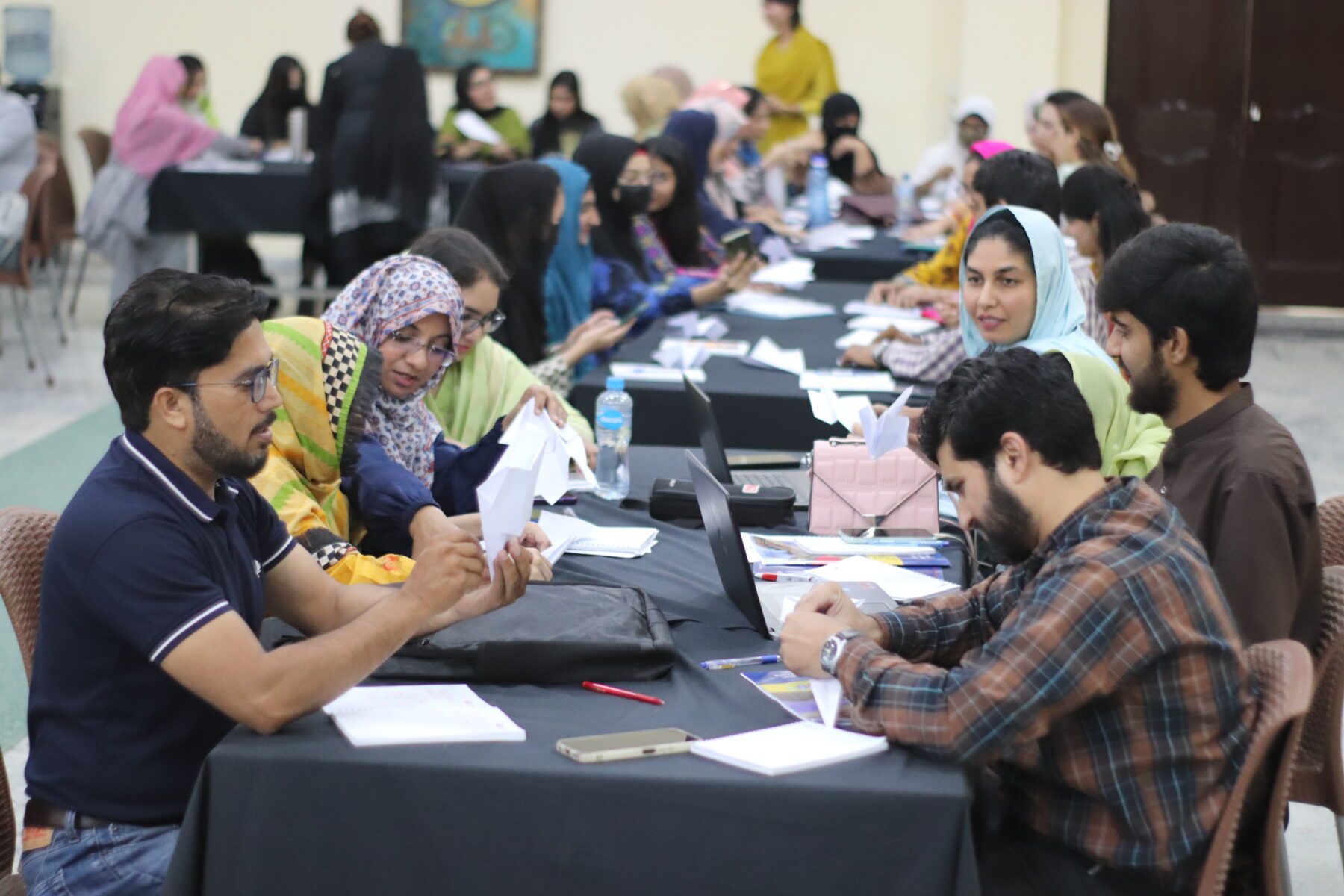
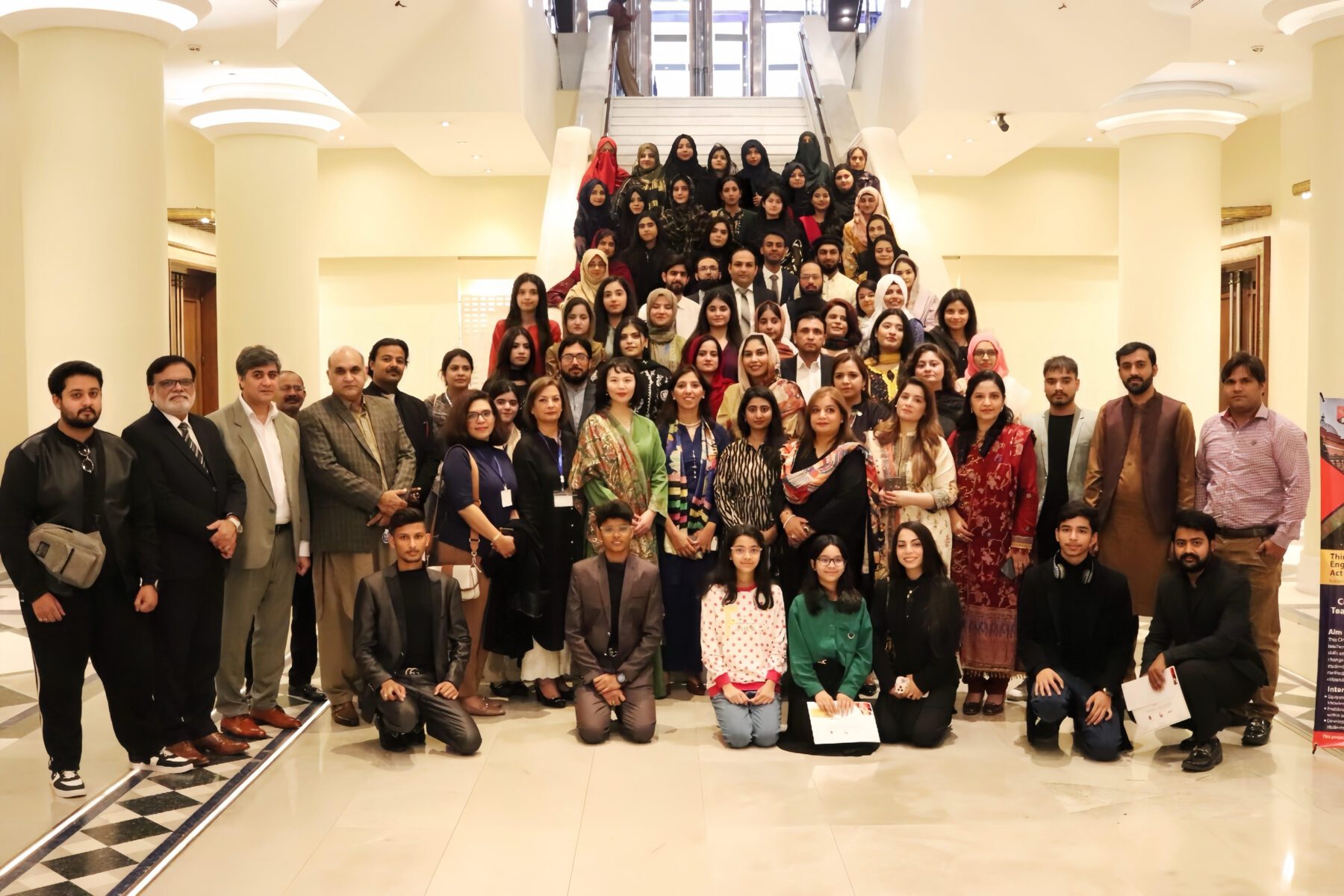
In response to the dual crises of pollution and education exclusion, the University of Birmingham (UK) and the University of Education (Pakistan) collaborated to design and deliver the Cultivating Global Citizenship: Empowering Teachers to Become Change Agents in Pakistan project. A total of 60 teachers participated in the project’s workshops, tutorials, art competition, and conference. A key outcome is that these teachers collectively designed and delivered 360 lessons, reaching approximately 12,000 students each year.
The project was designed around four key dimensions of global citizenship: sociocultural (e.g., gender equality), political-economic (e.g., multinational corporations and unequal wealth distribution), environmental (e.g., sustainability and green community), and digital (e.g., online misinformation/disinformation). We emphasise that global challenges such as pollution and education exclusion are deeply intertwined with social inequalities and uneven economic development, leaving many Global South communities particularly vulnerable. Rather than fostering a victim mindset, the project has empowered teachers, students, parents, and community members to co-create local solutions and harness local ingenuity to tackle these global challenges.
Global Mutirão in actions: Teaching Collective Responsibility for Climate Action
In our project, 30 pre-service teacher trainees were paired with 30 experienced in-service teachers to co-design and deliver global citizenship lessons to K–12 students. This mentoring model not only strengthened teachers’ professional learning across career stages but also ensured that the teaching materials were contextually grounded and responsive to local realities.
To deepen students’ critical understanding of climate change and to highlight its particular urgency in Pakistan, one of the world’s most climate-vulnerable countries, teachers asked students to research a recent climate-related event such as an extreme heatwave, a devastating flood, or large-scale wildfires. Students were guided in analysing the underlying causes and their disproportionate impact on communities in Pakistan, especially those already facing economic hardship. Through media stories, survivor testimonies, and conversations with families and friends directly affected by environmental degradation, students learned to connect the scientific mechanisms of climate change with its profound social and economic consequences.
Building on this context, teachers designed a role-play simulation in which students assumed positions such as government officials, climate scientists, community activists, and NGO workers. Each group was tasked with explaining how they could contribute to collective climate action, negotiate tensions between competing interests, and propose feasible strategies to strengthen Pakistan’s climate resilience. The simulation developed students’ evidence-based reasoning, empathy, and collaborative problem-solving competencies that are essential for global citizenship.
Global Mutirão in actions empowers teachers and students to map local resources, mobilise community partners, and collaborate with key stakeholders to tackle Pakistan’s escalating climate challenges.
Policy recommendations:
A global mobilisation against climate change requires collaboration at both international and local levels. At the international level, equitable and reciprocal partnerships between the Global North and Global South are essential to share knowledge, resources, and collective responsibilities. At the local level, teachers and students serve as key change agents, guiding their communities to take collective actions that serve long-term sustainable development.
1. Building equitable Global North–South education partnerships
Building equitable Global North–South education partnerships for climate justice and sustainability advances the Paris Agreement’s principle of “common but differentiated responsibilities and respective capabilities, in light of different national circumstances.” Rooted in solidarity, these partnerships should foster mutual learning and ensure that sustainability education and climate actions reflect diverse ecological, cultural, and socio-economic realities.
Industrialised nations in the Global North agree, under the UN Framework Convention on Climate Change, to support climate action in developing countries by providing financial assistance over and above any financial aid they already provide. These partnerships should prioritise South-led initiatives, recognising the Global South as a co-producer of knowledge rather than merely a recipient of sustainability education. Such partnerships could take the form of joint CPD programmes, educator and student exchanges, and the development and curation of educational resources and digital tools to monitor and address climate change effectively.
2. Mobilise local ingenuity for global climate action
Effectively mobilising local innovation, policies, and community-driven solutions within a coherent global climate action framework requires educators to act as change agents, educating themselves, students, parents, local communities, and governments about the importance of global cooperation in driving progress and the urgent need to act both faster and more equitably.
In particular, it is essential to educate local communities about the trade-off between long-term benefits and immediate investment — and sometimes sacrifice. An OECD-UNDP report shows that investing in climate solutions can help 175 million people escape poverty and increase global GDP by up to 13% by 2100. However, without coordinated policy implementation, sufficient funding, and inclusive participation, these potential benefits may not be realised, and inequalities could persist or even worsen.
To conclude, social science in general, and education in particular, holds transformative potential to advance climate justice and sustainability. By equipping educators and communities with knowledge and agency, initiatives such as COP 30 and the Global Mutirão can foster collaborative, locally grounded solutions that accelerate equitable climate action worldwide.
Photos courtesy of University of Birmingham
About the author
Meng Tian is an Associate Professor of Educational Leadership and the Director of Global Engagement at the College of Social Sciences, University of Birmingham. Her research focuses on empowering educators, whether or not they hold formal leadership positions, to exercise professional agency and leverage organisational resources to lead effectively and create a positive social impact.