
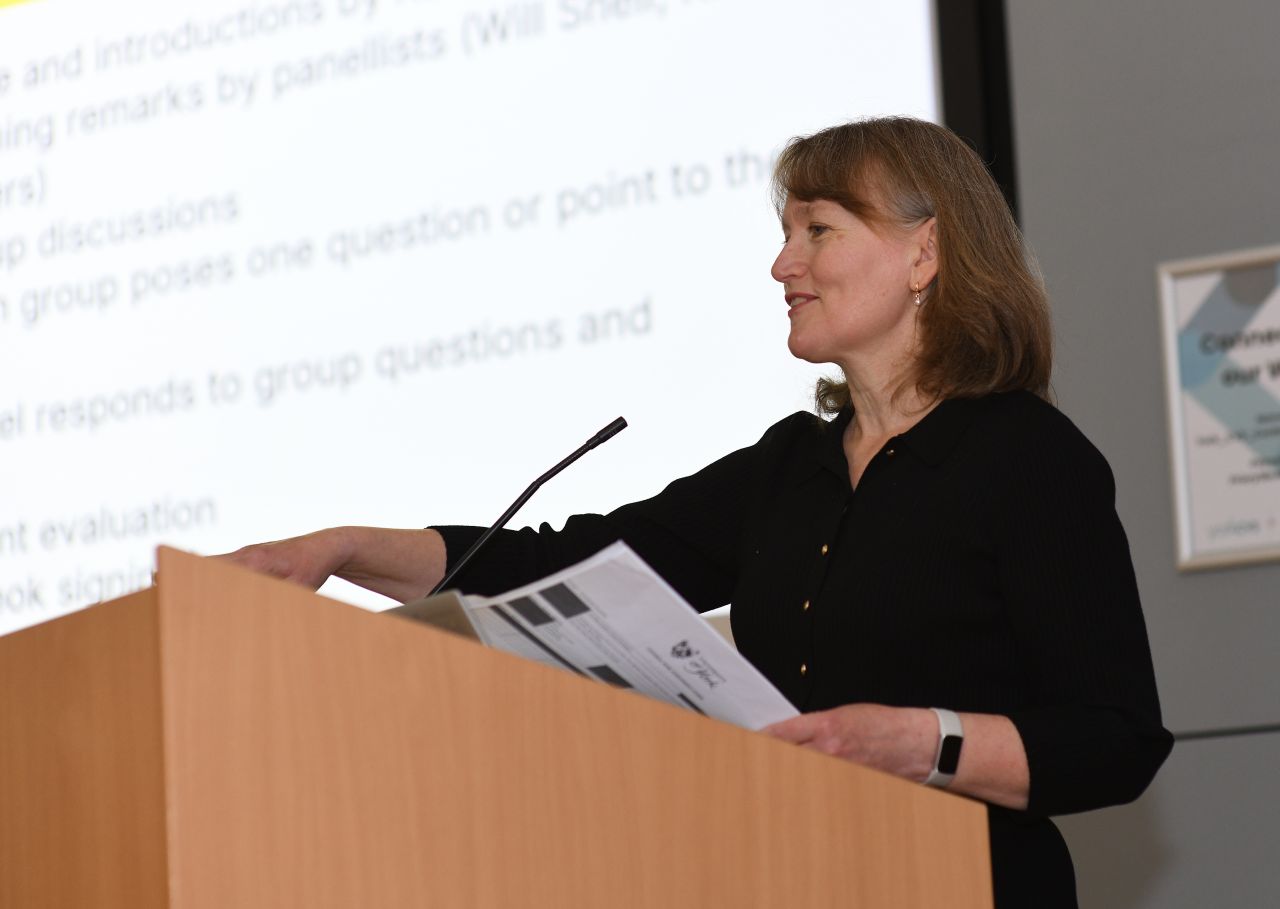
As part of the ESRC Festival of Social Science, the Campaign for Social Science collaborated with the University of York and the Fairness Foundation to deliver an event on 4 November exploring what makes a fair society, why fairness matters and what can be done to tackle inequality in Britain.
Drawing on Will Snell’s recently published book, The Fair Necessities: Why We Need a Fairer Britain and How to Make It Happen, the event brought together academic experts and members of the public to examine three central questions: how can fairness be defined and measured; why does it matter and how much do people care; and what practical steps could help make Britain fairer?
The discussion was chaired by Professor Karen Rowlingson FAcSS, Professor of Social Policy at the University of York, with contributions from Will Snell FAcSS, Chief Executive of the Fairness Foundation; Kit Colliver, Research Associate at the University of York’s School for Business and Society; and Dr Jed Meers, Senior Lecturer at the University of York Law School.
Will opened by highlighting the central role of wealth inequality in determining people’s life chances and opportunities. He argued that wealth increasingly has a greater bearing on living standards and outcomes than income alone, with inherited assets and property ownership reinforcing inequalities between generations. He also suggested that unfairness is not simply a moral concern: it has wider consequences for economic growth, democratic participation, public trust and the transition to net zero. Drawing on evidence of public attitudes, he highlighted the considerable concern about inequality across the political spectrum, alongside widespread support for government action.
Turning to what could be done, Will outlined three broad approaches: redistribution through the tax system, including reform of capital gains and inheritance taxes; ‘predistribution’, which would spread wealth more widely in the first place, including through a fairer share of corporate profits for workers; and stronger safeguards to prevent wealth inequality from translating into unequal life chances and political influence.
Kit then explored the relationship between wealth inequality, housing and place, drawing on a collaborative University of York, Joseph Rowntree Foundation and Good Organisation project, Revisiting Rowntree: Wealth, Ownership and Place in the City of York. Marking 125 years since Seebohm Rowntree’s landmark study of poverty in York, the project examines how wealth accumulation contributes to inequality today. Kit argued for shifting the conversation away from poverty alone towards the role of wealth in perpetuating disadvantage. Housing was a particular focus, with property ownership enabling wealth to accumulate across generations while others face high rents, insecurity and limited opportunities to build assets. She highlighted the potential of affordable and social housing, community land trusts and the idea of ‘limitarianism’ – setting limits on the accumulation of wealth beyond which it becomes socially or ethically unacceptable.
Jed brought a further perspective, focusing on the importance of fair treatment in people’s interactions with the state. Drawing on research into people’s experiences of the social security system, he described how individuals claiming Universal Credit and Personal Independence Payment were using generative AI tools not only to seek information and practical assistance, but also to express anxiety and frustration about their treatment by public services. He argued that fairness is about more than the decisions governments make: the processes through which people experience those decisions matter too. Meaningful human interaction, he suggested, is an important factor in building trust in government, and must not be lost as public services become increasingly automated.
The presentations were followed by small-group discussions and a Q&A session with the panel covering a range of topics including how to make housing more affordable, the relationship between fairness and equality, intergenerational inequality, the taxation of wealth, and the influence of wealth on political decision-making.
In their closing remarks, the panellists identified several practical priorities. These included strengthening the supply of social and affordable housing, improving enforcement of existing housing standards, addressing the influence of wealth on political donations and lobbying, and ensuring that fair treatment is given greater prominence in the design and delivery of public services. They also highlighted the importance of restoring public trust and addressing the underlying conditions that make inequality harder to challenge.
The event demonstrated the value of bringing academic research into conversation with public experience, creating space for a wider discussion about what fairness means and how it might be achieved in practice.