Professor Teerooven Soobaroyen was elected to the Fellowship of the Academy in autumn 2026. He is a Professor of Accounting at Aston Business School, Aston University.
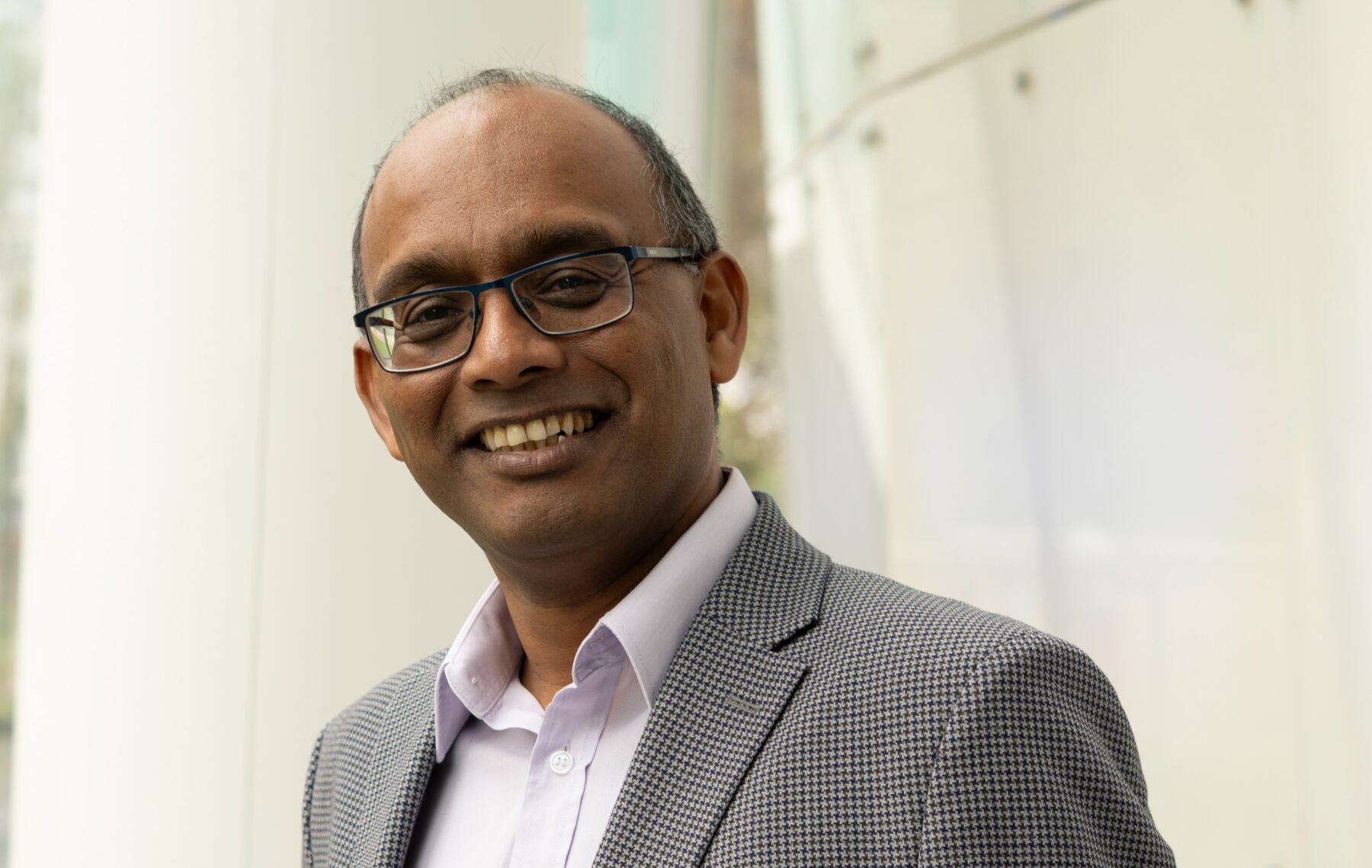
Professor Teerooven SoobaroyenFAcSS
Teerooven’s research focuses on the role of accounting, accountability and governance practices in Majority World countries. Drawing on a range of data sources and contexts, notably from Africa, he researches how ostensibly neutral techniques of calculation, reporting, governance and professional accountancy practice interplay with distinctive social, cultural, and political settings. Rather than dismissing unexpected implementation outcomes as ‘failure’ or ‘cultural’, he advocates the need for more contextually appropriate understanding of local and international practice that have a realistic opportunity of benefitting the country, communities and people’s livelihoods. Through his stakeholder and engagement work on corporate governance codes, sustainability frameworks, professional bodies and public sector financial management practices, he has collaborated with development and policy organisations such as the World Bank, Pan African Federation of Accountants (PAFA), the African Professionalisation Initiative, the Southern African Development Community (SADC) and the African Association of Accountants General (AAAG). He also seeks to develop local research capacity and engagement to ensure that accounting and governance reforms are informed and guided by local insights rather than being swayed by the proclaimed benefits and evidence derived from Global North experiences.
Teerooven is an associate editor of Accounting Forum, Journal of Accounting Literature, Accounting, Auditing and Accountability Journal and Journal of Accounting in Emerging Economies. He serves as an academic research advisor for the African Association of Accountants General (AAAG) and is the convenor for the research funding scheme of the African Accounting and Finance Association (AAFA) and Pan African Federation of Accountants (PAFA).
Why do social sciences matter?
In my experience, within mainstream business, management and accounting fields, there has often been an oversimplification of how individuals act, or ought to act, in the context of organisational, institutional and societal change. Individuals are also assumed to have little agency. Increasing interdisciplinary collaboration and engagement with the different fields of social sciences has allowed a better understanding of the complexity of individual and group motivations, values and beliefs that are at the core of change and impactful activity.
What do you enjoy most about your work?
While seen by many as mundane, procedural and technical, I find accounting and governance practices to be deeply fascinating, for example in terms of being both enablers and disablers of change, and how they can deeply shape livelihoods and human decision-making. My research often seeks to juxtapose the intentions of the designers and their algorithms relative to the realities and consequences on the ground, and how might one adapt or refine practices to enable positive change.
What is the most urgent issue social scientists need to tackle today and within the next three years?
There are three key inter-connected issues: climate change, inequality and the erosion of deliberative forms of governance. Undoubtedly, climate change and its consequences on people, nature and planet are for all to see, while increasing economic and social inequality fractures the systems and approaches conventionally based on common interests and public good. The perceived inability of democratic institutions to offer resolutions, alongside their capture by vested interests, compounds inaction, leading to popular disillusionment, distrust and division. The task of social scientists would be to reflect on a renewed form of representation and deliberation, built on open forms of accountability and governance, which promises to address climate change, inequality and promote the common good.
What does being a Fellow of the Academy of Social Sciences mean to you
I am very honoured to be elected as a Fellow of the Academy of Social Sciences and humbled to be part of a prominent constituency of scholars and practitioners. I dedicate this recognition to my collaborators, doctoral students, colleagues and family. Without their support, I would not be in this position, and this further encourages me to continue the efforts and contributions in the field.