Professor Chris Armstrong was conferred to the Fellowship of the Academy in autumn 2026.
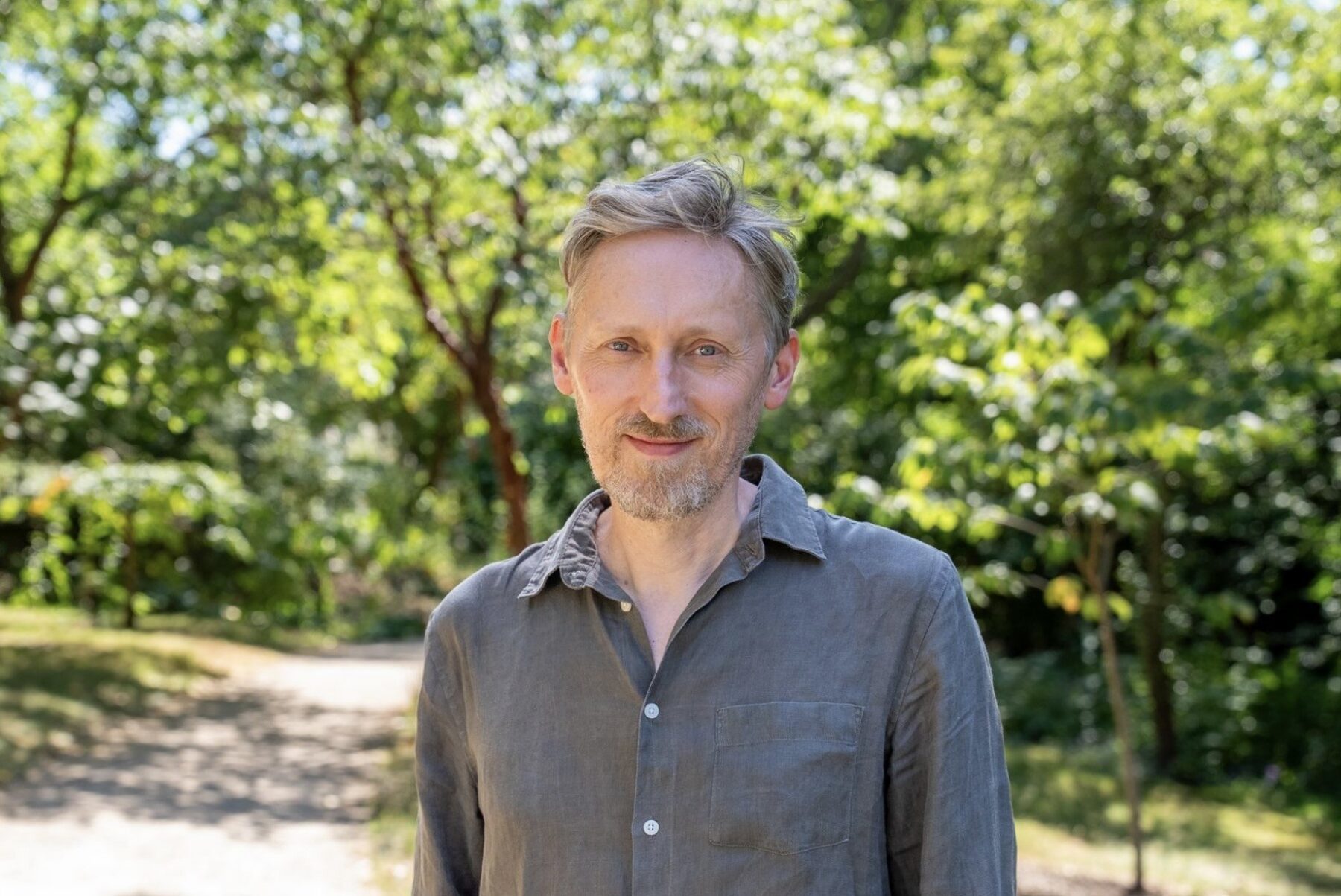
Professor Chris ArmstrongFAcSS
Professor of Political Theory at the University of Southampton, Chris’s research and teaching have a particular focus on questions of global justice and the environment, examining issues including the biodiversity crisis, ocean politics, animal ethics, natural resource justice, territorial rights, and climate justice.
Chris’s current research spans ocean governance, conservation justice, natural resource justice, global justice, and climate justice. More broadly, his work explores how political institutions and ethical frameworks should respond to environmental challenges in an increasingly interconnected world.
Chris is the author of six books, including Global Justice and the Biodiversity Crisis: Conservation in a World of Inequality (Oxford University Press, 2024), A Blue New Deal: Why We Need a New Politics for the Ocean (Yale University Press, 2022), Justice and Natural Resources (Oxford University Press, 2017), and Global Distributive Justice (Cambridge University Press, 2012). He has also published more than fifty journal articles and book chapters, and has contributed essays and commentary to publications including The Guardian and the London Review of Books.
Chris served as Head of the Department of Politics and International Relations at Southampton from 2014 to 2018 and has taught widely across political theory at undergraduate and postgraduate levels. He has also supervised numerous doctoral students working in normative political theory. He has held visiting fellowships at Uppsala University, the University of Oxford, the Australian National University, and the University of Oslo. His research has been supported by fellowships and awards from the Economic and Social Research Council, the British Academy, and the Leverhulme Trust.
Why do the social sciences matter?
Social science can help us grapple with some of the huge problems that face our societies – including inequality, democratic decline, and the destruction of the environment. Tackling such problems obviously demands a deep understanding of social dynamics. But it also, unavoidably, requires us to appeal to norms and values of the type that political theorists work with. Ultimately, we need to conjure alternative (more just and sustainable) visions of the future, and hope that they connect with people.
What is the most urgent issue social scientists must tackle today?
I’m especially interested in the justice dimensions of large-scale environmental problems. We need to find solutions to the climate crisis, the biodiversity crisis, and many other pressing issues. Those can’t be seen as purely technical challenges. We should care about these problems (at least in part) because they drive poverty, inequality and exclusion. And we should be wary of solutions that exacerbate inequality and exclusion. Thinking through what a politics that makes traction on these environmental problems while also alleviating social and global injustice might look like is a massive – but vitally important – task.
In some of my recent work, I’ve tried to bring the ocean into the centre of these discussions. The ocean covers most of our planet, and we depend on it in many ways – but it is often marginal to discussions about society, politics, and the future. Unfortunately, ocean governance is dysfunctional in various ways. Its ecosystems are being pummelled, while the growing “blue economy” is characterised by burgeoning inequality. Trying to envisage – and help bring about – just and sustainable ocean futures is a really important task that academics can surely contribute to.
What do you enjoy the most about your work?
In recent years my work on the ocean and on biodiversity has led me to work both with academics from a whole variety of disciplines, and with people outside of academia – especially in civil society. I’ve also tried hard to communicate the contributions that political theorists – and social scientists more broadly – can make to a wider public. I’ve found this enormously refreshing and rewarding work. In part I suspect because of a restless mind: I love the fact that I can spend much of my time reading science, history, law, and much else besides. But there is also an immediacy to this work which is not typical of academic life. Academic life has its rewards too but speaking to audiences of engaged citizens, or activists, or writing for the news media can be a powerful reminder that there really is an appetite out there for the ideas that academics work with.
What does being a Fellow of the Academy of Social Sciences mean to you?
The Fellows of the Academy are a deeply talented and diverse group of people, with so much to contribute. It’s very gratifying to be considered as part of this company. I value the Academy’s mission of being a voice for the social sciences, and hope to play my own small part in that too.