
Professor Eric Zhao was conferred to the Fellowship of the Academy in autumn 2026. He is Associate Dean for Research and Professor of Strategy at Saïd Business School, University of Oxford, and his research sits at the intersection of strategic management, organisation theory and entrepreneurship.
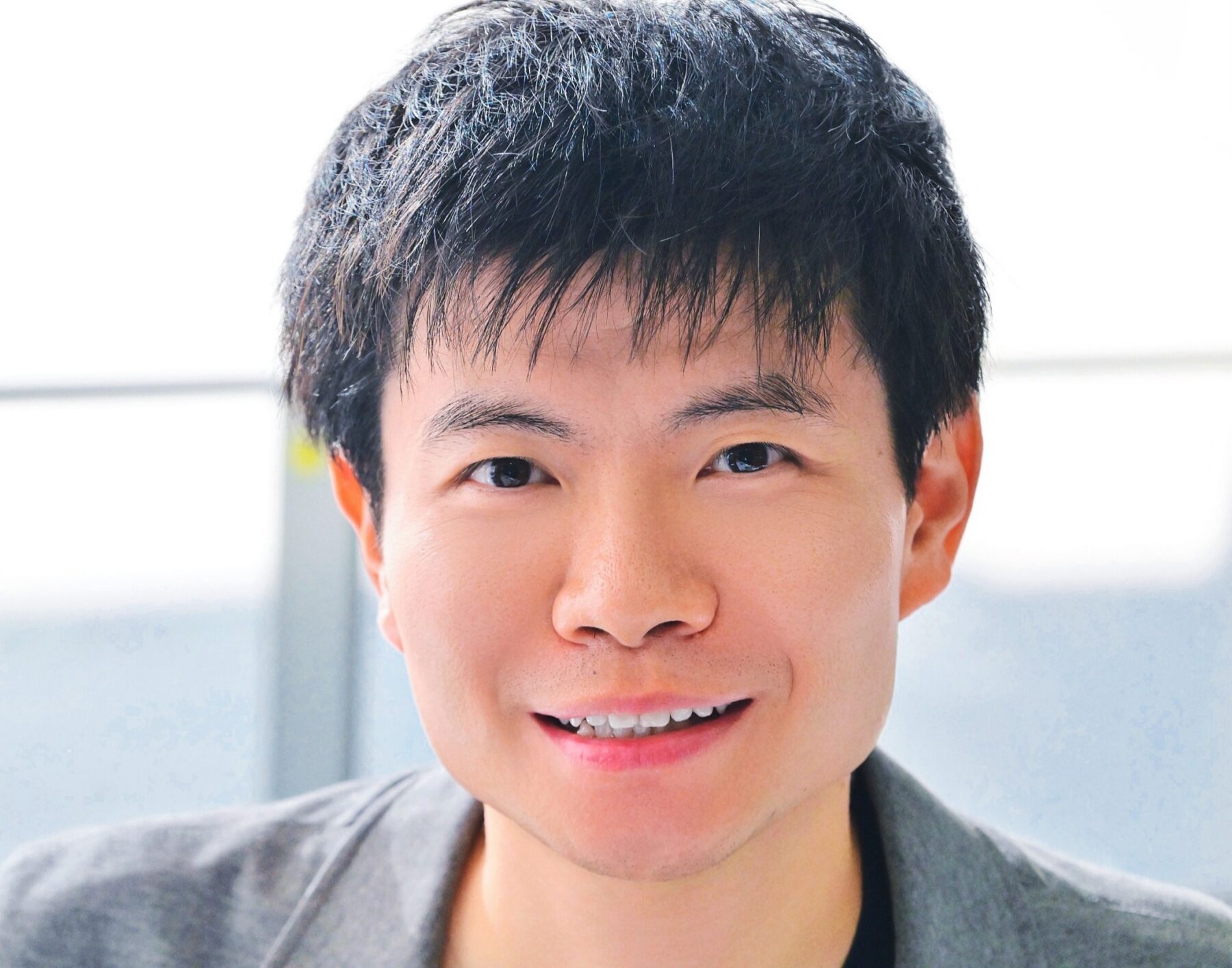
Professor Eric ZhaoFAcSS
Eric’s work examines how organisations create and capture value amid technological and institutional change, and he is best known for his foundational contributions to optimal distinctiveness theory: how organisations can be different enough to stand out while remaining familiar enough to be understood and accepted. Eric’s 2017 article in Strategic Management Journal and his 2022 book, Optimal Distinctiveness, have helped establish this as an influential cross-disciplinary field of research. He also studies institutions and entrepreneurship, resourcefulness, and organisational resilience. His current work extends these ideas to AI strategy, human-machine collaboration and the changing sources of competitive advantage.
Before joining Oxford, Eric was a visiting professor at Stanford University and held the Samuel and Pauline Glaubinger Chair of Entrepreneurship at Indiana University. His scholarship has appeared in leading management journals and is widely cited. His honours include the Academy of Management Emerging Scholar Award, the Strategic Management Society Emerging Scholar Award, and the Academy of Management Research Impact on Practice Award. Alongside his research, he contributes through editorial leadership, executive education, and the mentorship of doctoral students and early-career scholars.
Why do the social sciences matter?
The defining challenges of our time – from artificial intelligence and inequality to climate transition and geopolitical fragmentation – are not only technical problems. They are problems of human behaviour, organisational choices, institutions and power. Social science helps us understand how these forces interact, who benefits, who bears the costs, and why well-intentioned interventions sometimes produce unexpected consequences. It turns complexity into evidence that leaders and policymakers can act on. In my own work, it explains why an innovation succeeds only when people regard it as both valuable and legitimate. Without social science, we may build more powerful technologies; with it, we have a better chance of using them wisely.
What inspires you about your work?
I am most energised by questions that look simple but reveal a deeper tension. Why must an organisation be different enough to attract attention yet familiar enough to earn trust? Why can the same institution enable entrepreneurship for some people while constraining others? These puzzles travel across industries, countries and technologies, so each project opens a new window on how organisations and society work. I also value the collaborative nature of scholarship: learning from colleagues across disciplines, helping doctoral students develop their own intellectual voice, and translating research into ideas that executives and policymakers can use. The most rewarding moments are when a rigorous theory changes how someone sees a practical problem.
What is the most urgent issue social scientists need to tackle today and within the next three years?
The most urgent issue is how to govern the rapid shift from AI as a tool to AI as an active participant in organisational decisions. The key questions are social as much as technical: Who has authority when humans and AI agents work together? Who is accountable when an algorithmic decision causes harm? How do we preserve human judgement, dignity and opportunity while capturing the benefits of automation? Over the next three years, adoption will move faster than many institutions can adapt. Social scientists must therefore provide timely evidence on new organisational designs, trust and legitimacy, changing skills, and the distribution of gains and risks. The goal should not merely be more capable AI, but institutions capable of using AI responsibly.
What does being a Fellow of the Academy of Social Sciences mean to you?
Being elected a Fellow is a profound honour because it is recognition from a community that values rigorous, interdisciplinary and publicly engaged scholarship. It also carries a responsibility. Social science is most valuable when it not only explains the world but helps people make better choices within it. I see the Fellowship as an opportunity to champion the contribution of management and organisation research to major societal questions, particularly those created by AI and institutional change; to learn from Fellows working in other fields and sectors; and to help ensure that evidence travels beyond academia to leaders, policymakers and communities. I am delighted to join that collective endeavour.